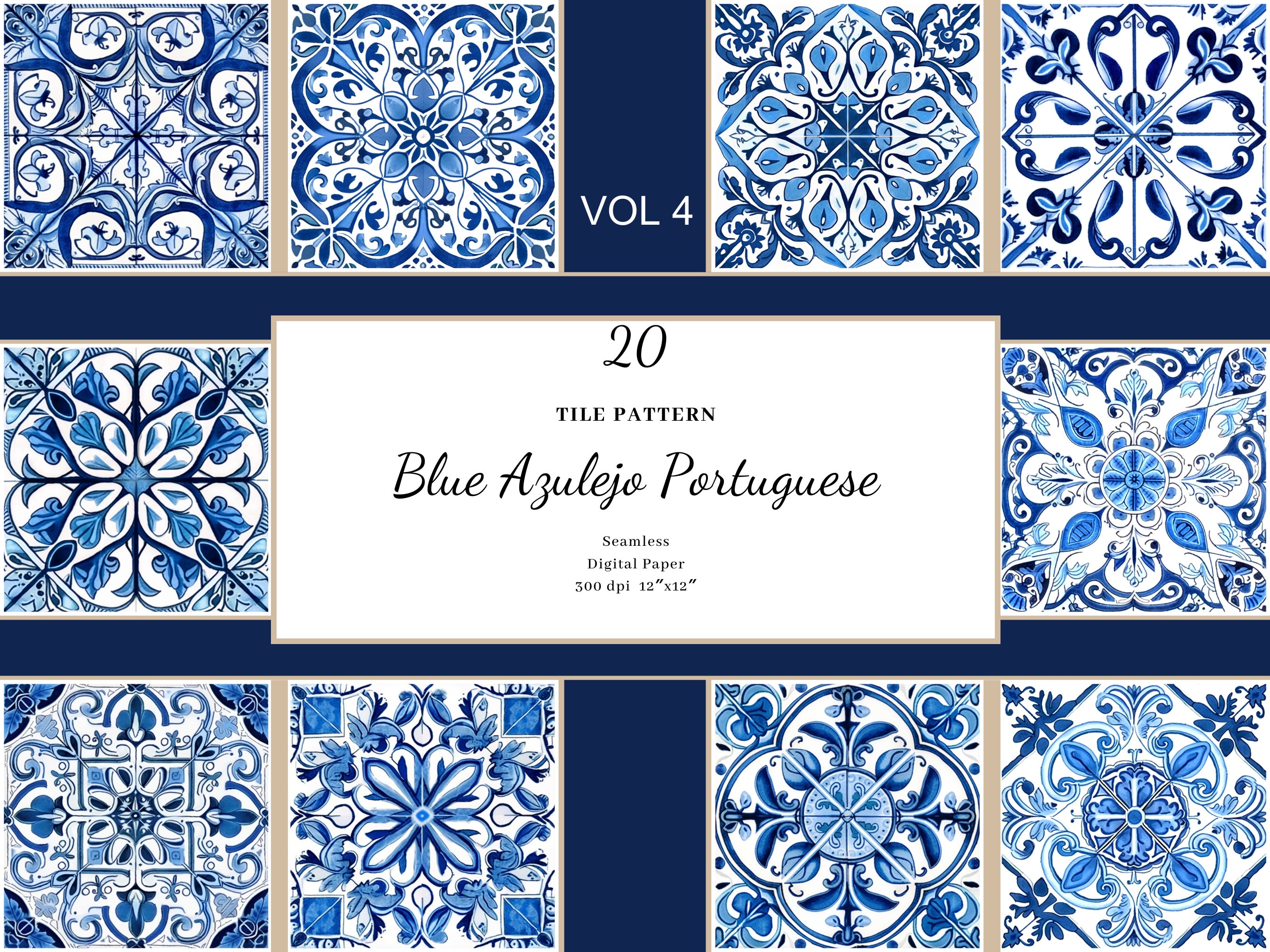

Stepping into the sun-drenched streets of Lisbon or Porto is like walk through a living gallery where account is literally baked into the paries. The vibrant vapours, intricate geometric practice, and straggle narrative murals that deck churches, castle, and ordinary habitation are the solvent of a centuries-old custom. To Craft Portuguese Azulejo Tiles is to engage with an art signifier that has specify the aesthetic individuality of Portugal since the 15th hundred. These glass ceramic tile are more than just decorative elements; they are storytelling medium that have survived empires, quake, and the passage of clip. Today, the revivification of artisanal craft has sparked a global involvement in learning how to embolden these masterpieces, blending ancient techniques with modernistic originative sensibility.
The Historical Evolution of Azulejos

The news "azulejo" detect its roots in the Arabic word al-zulaich, imply "svelte stone". While many presume it advert to the Portuguese intelligence for blue ( azul ), the earliest tiles were actually a kaleidoscope of colors including amber, green, and manganese. The Moors introduced the technique to the Iberian Peninsula, but it was King Manuel I who, after a visit to Seville in 1503, brought the obsession to Portugal. He was captivated by the Islamic "alicatado" (mosaic) style and demanded his palace in Sintra be adorned with similar brilliance.
Over the centuries, the mode evolved through several distinct periods:
- The Manueline Period: Prevail by Mudéjar influence, featuring geometrical form and high-relief textures.
- The Rebirth: Intro of the maiolica technique, allowing artists to paint directly onto flat tile like a canvas.
- The Golden Age (17th-18th Century): The iconic "Blue and White" era, influenced by Chinese porcelain and Delftware, where large-scale nonliteral view became the average.
- The Art Nouveau and Art Deco Motion: Wreak flowered motifs and stylized symmetry to urban frontal in the former 20th century.
To Craft Portuguese Azulejo Tiles today is to pay homage to this timeline, take between the rigid geometry of the past and the fluid, painterly expressions of the Baroque era.
Essential Tools and Materials for Tile Making

Before you begin your journeying to Craft Portuguese Azulejo Tiles, you must gather the specific tools required for the majolica (tin-glazing) process. This method is the most traditional way to attain the classic Lusitanian look, characterized by a white opaque base and vibrant overglaze painting.
| Family | Detail | Purpose |
|---|---|---|
| Base Material | Earthenware Clay | The "biscuit" or "bisque" body of the tile. |
| Glaze | Tin-Opaque White Glaze | Provides the touch milky white canvas. |
| Pigments | Cobalt Blue Oxides | The main color for traditional form. |
| Coating | Natural Hair Brushes | Essential for smooth, contain line employment. |
| Firing | Kiln | Requires temperatures between 900°C and 1050°C. |
notably that the quality of your clay and the body of your glaze will order the longevity of the finished production. Traditional Lusitanian tiles are ordinarily 14x14 cm, though modern interpretations vary in size.
The Step-by-Step Process to Craft Portuguese Azulejo Tiles

The process of create these tiles is a lesson in forbearance and precision. It regard two distinct firings and a unfluctuating manus. Follow these measure to Craft Portuguese Azulejo Tiles in the traditional mode.
1. Preparing the Clay Slab
Start with a high-quality earthenware clay. Undulate it out to a undifferentiated thickness, typically about 8mm to 10mm. Using a square cutter or a template, cut the mud into 14cm squares. It is crucial to let these tiles dry slowly under a weight or between board to prevent warping. Once bone-dry, they undergo their first firing, known as the bisque flame, ordinarily at 1000°C.
2. The Glazing (Opaque Base)
Once you have your bisque tile, they must be douse into a tin-glaze. This glaze is opaque and acts like a white primer. Unlike modernistic glazes that might be open, this provides the "bone-white" background characteristic of the 18th-century way. The tile is dipped rapidly and allowed to dry until it sense chalky to the touching.
3. Transferring the Design (Spolvero)
To maintain eubstance across multiple tile, artificer use the spolvero proficiency. This affect prick pocket-sized hole along the lines of a paper design, placing it over the shiny (but unfired) tile, and dusting it with charcoal gunpowder. This leaves a faint "connect-the-dots" outline on the surface to lead your picture.
4. Painting with Oxides
This is the most critical stage when you Craft Portuguese Azulejo Tiles. Using alloy oxide (usually cobalt for blue or copper for green), you paint now onto the raw, powdered glaze. The glaze absorbs the paint forthwith, meaning there is no way for fault —you cannot erase a stroke once it is made. The brushwork must be confident and fluid.
5. The Final Firing
The tiles are range backward into the kiln for the "glost fire." During this summons, the white base glaze and the painted oxides melt together. The fusain lines from the transportation process disappear, and the dull grey co transmute into a brilliant, deep blue. The resolution is a glistening, vitrified surface that is waterproof and fade-resistant.
💡 Line: Always insure your kiln is well-ventilated when fire oxides, as the chemical response can unloose fumes that are best dribble away from your primary workspace.
Design Styles: From Geometric to Figurative

When you resolve to Craft Portuguese Azulejo Tiles, choosing your pattern is the most creative component of the journeying. The history of Portuguese design offers a vast library of inspiration.
- Pattern Tiles (Padrão): These are designed to be repetitious. When four or more tiles are placed together, they form a big, co-ordinated geometric or flowered plan. This was mutual in the 17th century for continue large paries surface expeditiously.
- Nonliteral Scenes (Historiados): These are like giant teaser. Each tile comprise a pocket-sized portion of a much larger picture - often depicting spiritual scene, historical fight, or day-by-day living ( cenas de costumes ).
- Single Motifs (Avulso): Green in kitchen, these tile feature a individual self-governing image in the centerfield, such as a chick, a peak, or a sailing ship, ofttimes surrounded by a simple edge.
Mod craftsman often conflate these style, using the traditional co blue pallet but applying it to contemporaneous, nonobjective designs or even minimalist botanical sketches.
Common Challenges and Pro Tips
The path to Craft Portuguese Azulejo Tiles is filled with technological hurdling. Understanding these mutual number will assist you attain a professional finish.
Warp: Clay has "memory". If it is stressed during the trilled phase, it will kink in the kiln. Always wheel your clay in multiple way and flip it ofttimes. Dry the tile slowly is the best defense against arc bound.
Crazing: This refers to the fine meshwork of fissure that can appear in the glaze after firing. While sometimes hope for an "antique" looking, it is technically a glaze fault caused by a mismatch between the enlargement of the clay and the glaze. To avoid this, ensure your glaze and clay body are chemically compatible.
Pinholing: Small bubbles or hole in the glaze can occur if the bisque tile was not clean of junk before glazing, or if the kiln fire too apace. Always wipe your bisque tiles with a dampish sponger before you get the glazing procedure.
⚠️ Note: If you are using traditional cobalt oxide, remember that the color you see in the jar (commonly a dull purple or grey) is not what you will see after discharge. Always fire a test tile foremost to approximate the volume of your pigment concentration.
The Cultural Significance of Azulejos Today

In the modern era, the effort to Craft Portuguese Azulejo Tiles has moved beyond mere medallion. It is now a form of architectural conservation. In city like Lisbon, "Tile Gunman" (thief who strip tiles from old edifice) have get the preservation and reproduction of these tile a matter of national heritage. Many workshops now focus on make "alternate tiles" to restore discredited facades, control the city's visual story remains intact.
Moreover, contemporary artists are pushing the bounds of the medium. By integrating azulejos into modern public art induction and underpass place, they show that this ancient craft is flexile enough to ponder 21st-century living. Whether it's a pixelated portrayal get of ceramic squares or a 3D-textured paries, the look of the azulejo remains constant: it is an art of the citizenry, designed to be find in the unfastened air rather than hidden in a veranda.
Final Thoughts on Mastering the Craft
Learning to Craft Portuguese Azulejo Tiles is a rewarding attempt that connects you with centuries of aesthetic custom. It need a balance of technical skill, historic apprehension, and originative sight. By surmount the maiolica proficiency, you are not just create a ornamental object; you are participate in a ethnical legacy that has journey from the palaces of the Moors to the mod homes of today. Whether you choose to quicken the classic blue and white shape of the 18th hundred or forge a new route with contemporary design, the operation remains a contemplative and profoundly fulfill journey into the heart of ceramic art. As you pull your finished tile from the kiln and see that magnificent cobalt radiance for the first time, you go portion of the ongoing story of the Portuguese azulejo.
Related Term:
- azulejo tiles in lusitanian plan
- authentic lusitanian ceramic tile
- lusitanian tile custom story
- lusitanian tile azulejos for sale
- is azulejos universal
- buy portuguese tiles online